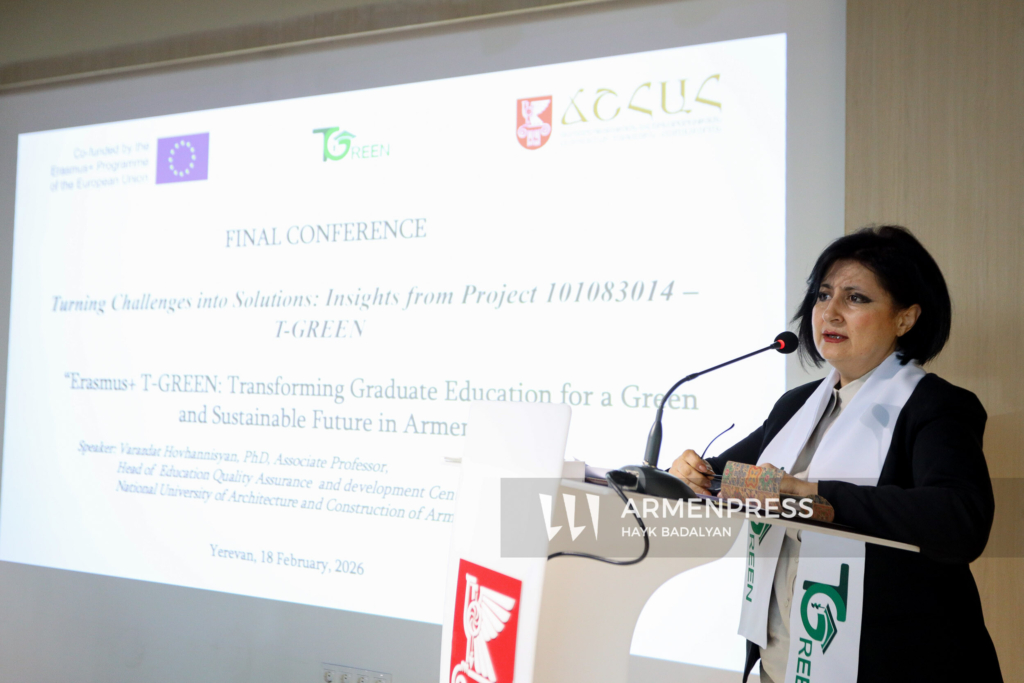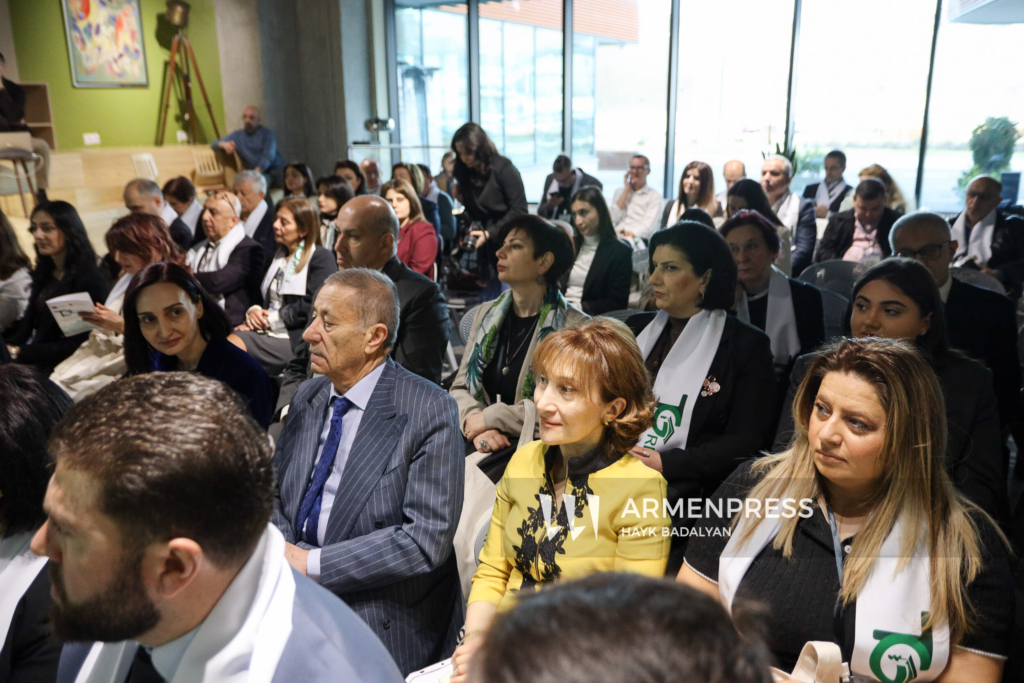

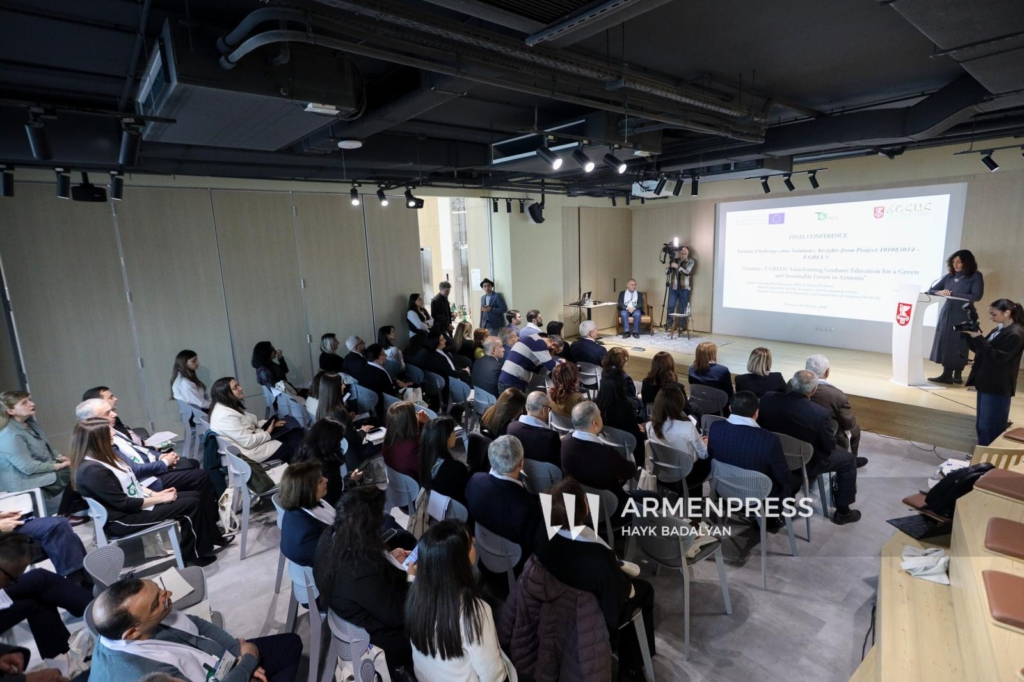
The final conference of the three-year international project “Transforming Graduate Education for Green and Sustainable Future” (T-GREEN) has commenced in Yerevan and will continue through February 20.
According to Armenpress, the EU-funded project aims to reform university education in Armenia by facilitating the transition from traditional curricula to future-oriented, green, and multidisciplinary educational programs, while also promoting student mobility.
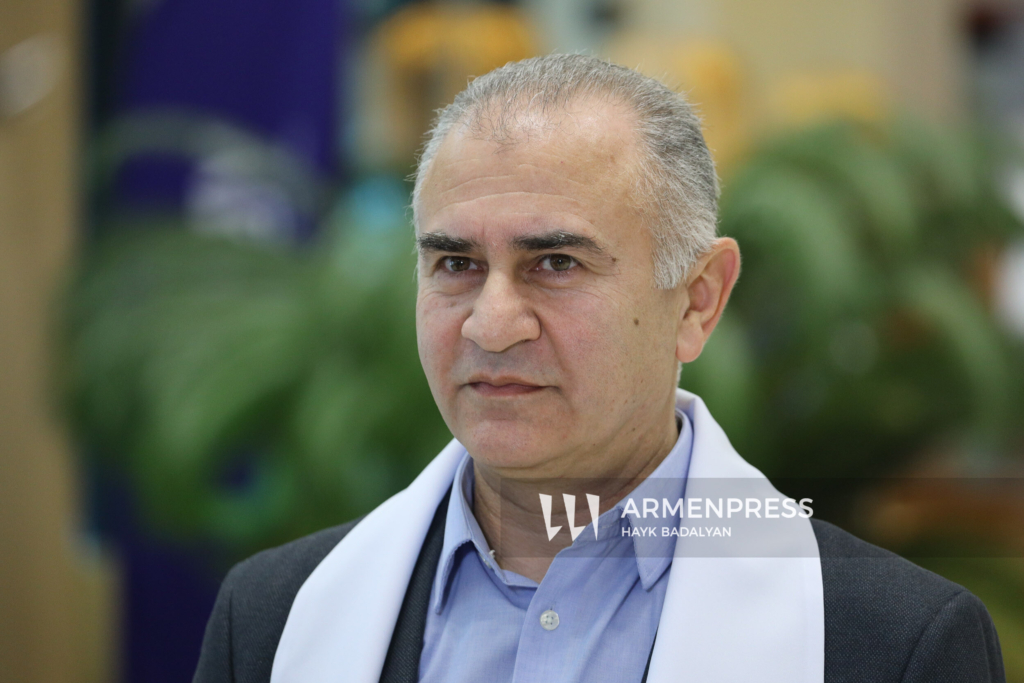
Varazdat Hovhannisyan, Head of the Center for Educational Development and Innovation at the National University of Architecture and Construction of Armenia (NUACA), stated that the goal of the Erasmus+ T-GREEN project was to transform applied green technologies into educational pathways.
“The objective was not only to have Master’s programs focused on green technologies but also to change mindsets during the educational process. Another vital goal was to foster cooperation among Armenian universities regarding student and faculty exchanges and the implementation of joint educational programs. The reality today is that while we can easily exchange credits or students with EU universities, we must also achieve that same level of recognition and integration among our local institutions,” Hovhannisyan explained.
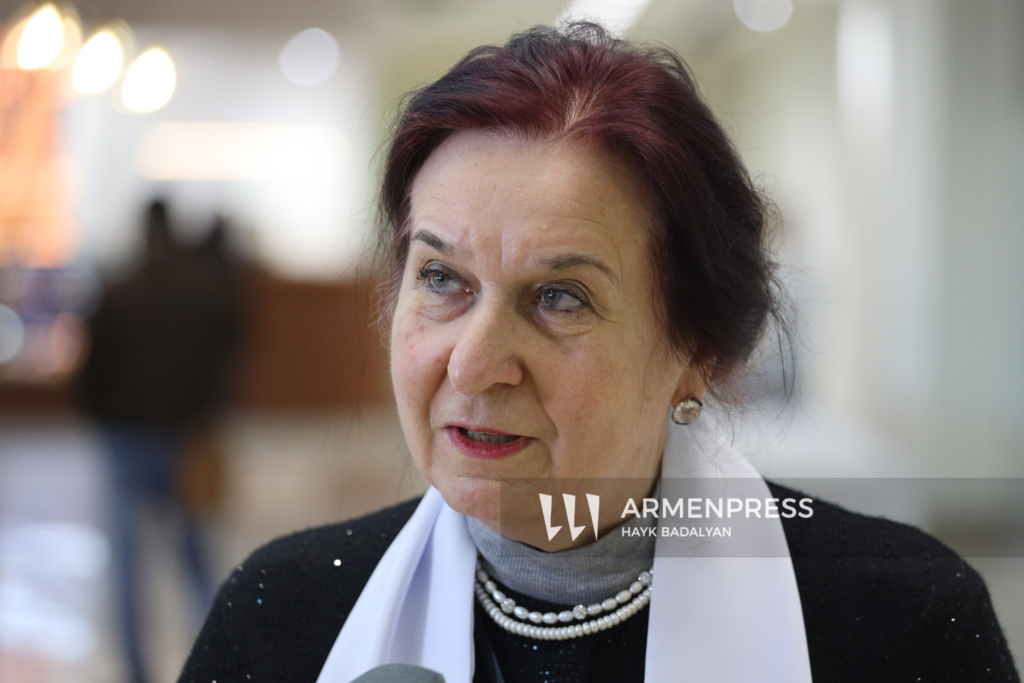
Professor Asta Vasiliauskaitė, representative of Mykolas Romeris University in Lithuania, noted that throughout the three-year project, they shared their expertise in green technologies and energy efficiency—both in terms of education and regulatory documentation—with their Armenian partners.
“Today, we are happy to summarize this three-year cooperation program. Moving forward, we will strive for even closer collaboration regarding student and faculty exchanges,” said the Lithuanian representative.
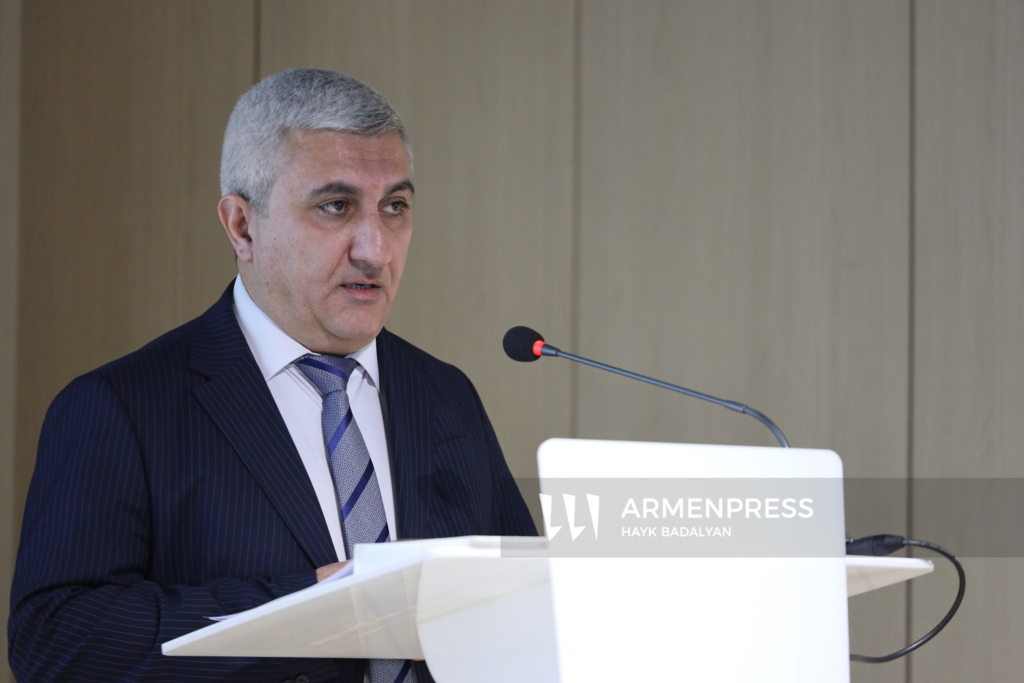
Manuk Barseghyan, Rector of NUACA, noted that the project provided an opportunity to review and modernize Master’s programs, develop the professional capacities of universities, and strengthen the integration of sustainable development principles into the educational process.
“Thanks to the joint efforts of European and Armenian partner universities, new Master’s programs have been developed and are already being implemented, providing a modern education that meets international standards. These programs aim to prepare specialists who can effectively respond to environmental, technological, and economic challenges, becoming knowledgeable and responsible leaders in their fields,” the Rector expressed with confidence.
Nune Petrosyan, Deputy Chair of the RA Urban Development Committee, observed that the inclusion of sustainable development principles in educational processes—supported by European partners—will greatly contribute to the internationalization of Armenia’s educational system and the training of specialists who meet the modern demands of the global labor market.
The “Transforming Graduate Education for Green and Sustainable Future” project was coordinated by the National University of Architecture and Construction of Armenia.